Transformer Knowledge Base & Technical Insights — Kokila Electricals
Transformer Insights & Engineering Articles
Discover technical articles, maintenance practices, and design innovations across power, distribution, furnace, and dry type transformers.
Distribution & Power Transformer Solutions
Comprehensive guides on transformer selection, energy efficiency standards, and industrial grid deployment.
High Voltage & Dry Type Transformer Insights
Learn more about electrical safety, maintenance routines, and custom engineering applications.
Why Choose High Voltage Power Transformers?
Table of Contents
Why Choose High Voltage Power Transformers?
Electricity rarely travels from a generating station to a city in a straight, simple path. It crosses long transmission lines, substations, industrial yards, and crowded distribution networks. At each stage, high voltage power transformers help raise or reduce voltage safely and efficiently. Their purpose is practical: move large amounts of energy while limiting current and reducing transmission losses.
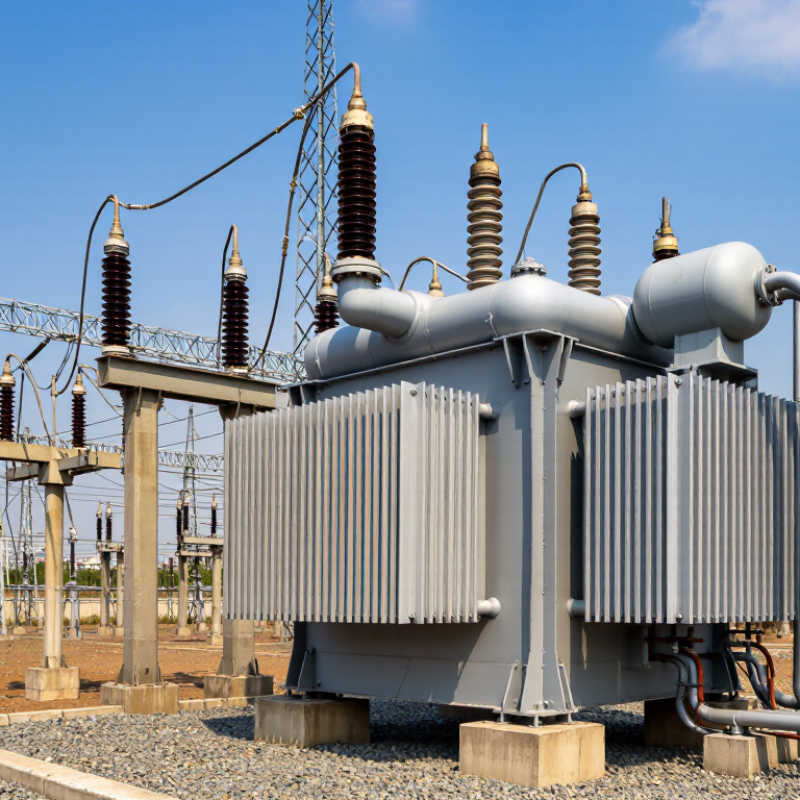
John J. Winders Jr., a respected transformer-engineering author, writes, “The transformer is one of the most efficient electrical machines ever developed.” That efficiency explains their central role in modern grids. A well-designed transformer can support heavy industrial loads, stabilize voltage, and operate for decades with proper maintenance. Its conservator tank, bushings, cooling radiators, and insulating oil all perform important duties. Small details matter.
Reliability is not automatic.
Engineers still examine thermal aging, moisture, partial discharge, short-circuit strength, and installation conditions before selecting equipment. A transformer that performs well in a laboratory may face dust, salt air, vibration, or sudden load changes in service. This is where field experience becomes valuable. Monitoring oil temperature and dissolved gases can reveal developing faults before a loud failure occurs.
There is no universal transformer for every project. Capacity, voltage class, climate, efficiency targets, safety requirements, and budget must be evaluated together. Choosing high voltage power transformers is therefore less about buying the largest unit. It is about matching proven engineering with real operating conditions, while admitting that even excellent designs require inspection, testing, and thoughtful maintenance.
What Are High Voltage Power Transformers?
High voltage power transformers are static electrical devices that transfer energy between circuits through electromagnetic induction. They usually increase voltage for long-distance transmission and reduce it near industrial facilities or communities. Higher voltage allows power to travel with lower current, which can reduce line losses and conductor heating.
Inside the tank, insulated windings surround a magnetic core made from carefully layered steel. The core guides magnetic flux, while the windings control the voltage ratio. Mineral or alternative insulating fluid may cool the active parts and strengthen electrical insulation. Large radiators release heat, and monitoring systems track oil temperature, winding temperature, pressure, and moisture.
Choosing a high voltage transformer can improve transmission efficiency and support heavier electrical loads. It may also reduce the need for oversized conductors over long routes. However, the choice requires field experience. A transformer that looks adequate on paper may struggle with harmonics, sudden load changes, poor ventilation, or dusty conditions. Not every installation needs the highest available voltage. Engineers should review insulation levels, fault currents, cooling capacity, maintenance access, and local grid requirements before approval. Small details matter. A loose connection, aging seal, or overlooked temperature rise can become an expensive failure. Reliable operation depends on proper testing, protection coordination, documented inspections, and realistic loading rather than optimistic calculations.
How Do High Voltage Power Transformers Work?
High-voltage power transformers work through electromagnetic induction. Alternating current enters the primary winding and creates a changing magnetic field. A laminated steel core guides this field toward the secondary winding. Voltage changes according to the turns ratio between both windings. More secondary turns increase voltage. Fewer turns reduce it. The process looks simple, yet insulation design is demanding. Tiny gaps, moisture, or contamination can weaken protection.
Inside the tank, mineral oil or another approved insulating fluid performs two jobs. It separates energized parts and carries heat toward radiators. Natural circulation moves warm fluid upward. Cooler fluid then returns through the tank. Fans or pumps assist during heavy loads. Bushings carry conductors safely through the tank wall. Tap changers adjust the turns ratio when system voltage changes. They need careful maintenance. A small contact problem can create heat, noise, and eventual failure.
During field inspections, technicians check oil temperature, dissolved gases, bushings, grounding, and unusual vibration. Protection relays can disconnect the transformer when faults develop. Operators also compare current readings with older records. That trend often matters more than one abnormal value. High-voltage equipment demands distance and strict procedures. Never judge condition by appearance alone. Clean exteriors can hide aging insulation. That is an uncomfortable lesson. Testing should confirm assumptions before loading the transformer near its rating. Even accurate calculations cannot remove every field uncertainty.
Which Applications Depend on High Voltage Transformers?
High voltage transformers are essential wherever electricity must travel long distances or serve demanding loads. They increase voltage for efficient transmission, then reduce it near homes, factories, and public facilities. At utility substations, engineers assess load growth, fault levels, cooling capacity, insulation, and local environmental conditions. Distance changes everything. A transformer selected only from today’s demand may struggle when a new industrial park connects.
Which applications depend on high voltage transformers? Renewable energy projects use them to connect wind farms and solar plants to transmission networks. Their output can fluctuate, so protection systems and voltage control require careful coordination. Heavy industries, including steel, chemical, and mining operations, need stable high voltage supplies for furnaces, motors, compressors, and processing equipment. Rail electrification systems also rely on transformers to deliver controlled power along long routes. Large data centers and hospitals use them for reliable distribution, often with redundant units and automatic transfer systems.
In the field, maintenance teams inspect bushings, cooling fans, connections, and oil condition. Thermal imaging can reveal a loose joint before it causes severe damage. The margin matters. Even a well-designed installation can face unexpected harmonics, moisture, or rapid load changes. Specifications should be reviewed against measured operating data, not assumptions alone. That practical step is sometimes missed.
What Benefits Do High Voltage Power Transformers Provide?
High voltage power transformers support efficient electricity transmission across long distances. By increasing voltage, they reduce current in transmission lines. Lower current means less heat and energy loss in conductors. This can improve grid efficiency and reduce operating costs over time. In field inspections, technicians often notice the difference in cable temperature and equipment loading. Cooler conductors usually indicate healthier system performance.
These transformers also provide stable voltage for substations, factories, renewable energy sites, and large commercial facilities. Their robust insulation systems help manage electrical stress and changing weather conditions. Proper protection can limit damage during faults, though no transformer is perfect. Aging seals, moisture, and overloaded windings can still create serious risks. Regular oil testing, thermal monitoring, and visual inspections support reliable operation. Maintenance decisions should follow measured data, engineering standards, and qualified technical review. A rushed inspection may miss a small warning sign.
Tips: Confirm the transformer’s rated voltage, capacity, cooling method, and insulation level before installation. Keep clear records of load trends and unusual sounds. Check bushings for cracks, contamination, or oil leakage. Maintain safe working distances and use approved procedures. Do not rely only on appearance; hidden insulation damage may develop quietly. Review the maintenance plan after major load changes, storms, or repeated protection trips.
What Factors Guide the Selection of a High Voltage Transformer?
Choosing a high voltage power transformer requires more than matching voltage and capacity. The first decision is the voltage class, insulation level, and expected load profile. Engineers should review peak demand, short-circuit current, harmonics, and future expansion. A transformer running near its limit may overheat during summer peaks. That risk is easy to underestimate.
The IEA’s Electricity 2024 report projects global electricity demand to grow by about 4% annually from 2024 through 2026. This growth increases pressure on substations and transmission equipment. The IRENA Renewable Capacity Statistics 2025 report records 585 GW of renewable capacity added in 2024. Variable generation makes voltage regulation, tap-changing range, and system stability more important. Cooling matters. Oil-immersed and dry-type designs suit different locations, fire controls, maintenance plans, and load conditions.
Site conditions also guide selection. Engineers should check altitude, humidity, salt exposure, dust, seismic risk, and ambient temperature. Efficiency deserves close attention because transformer losses continue throughout its service life. Applicable IEC or IEEE requirements should define testing, insulation coordination, noise limits, and protection interfaces. Field commissioning data can reveal unexpected inrush current or temperature rise. A neat load estimate can still be wrong. That weakness deserves review through measured data, realistic expansion assumptions, and independent factory test results. Loss evaluation should include purchase cost, energy cost, maintenance, spare parts, and expected service life.
FAQS
They raise voltage for long-distance transmission and reduce it near homes, factories, and public facilities. This lowers transmission losses.
Wind farms and solar plants use them to connect with transmission networks. Rail systems, hospitals, data centers, and heavy industries also depend on them.
Wind and solar output can change quickly. Voltage control, protection systems, and tap-changing functions must respond together. Small mismatches can create larger problems.
Engineers should review voltage class, insulation level, peak demand, fault current, harmonics, and future expansion. Today’s load may not represent tomorrow’s site.
A new industrial park can increase demand suddenly. A transformer selected only for current consumption may overheat or operate too close to its limit.
Altitude, humidity, salt, dust, seismic activity, and ambient temperature all matter. A coastal site needs different protection from a dry inland location.
Teams inspect bushings, cooling fans, electrical connections, and oil condition. Thermal imaging can reveal a loose joint before serious damage occurs.
No. Measured operating data, commissioning results, and independent factory tests should support the design. A neat estimate can still be wrong.
Consider purchase price, energy losses, maintenance, spare parts, and service life. The cheapest unit may cost more after years of continuous operation.
Large hospitals, data centers, and demanding factories often need reliable distribution. Redundant units and automatic transfer systems can keep essential loads operating. Reliability needs planning.
Conclusion
High voltage power transformers are essential electrical devices that transfer energy between circuits while increasing or reducing voltage levels for efficient transmission and distribution. They work through electromagnetic induction, using carefully designed windings and magnetic cores to convert voltage while maintaining the required frequency. By enabling electricity to travel over long distances with reduced energy loss, these transformers support the stability and reliability of modern power networks.
High voltage transformers are used in generation plants, transmission substations, industrial facilities, renewable energy systems, and large commercial infrastructure. Their key benefits include improved transmission efficiency, dependable voltage regulation, enhanced grid capacity, and support for growing electricity demand. Selecting the right transformer requires evaluating voltage ratings, power capacity, operating environment, cooling method, insulation performance, efficiency, maintenance needs, safety requirements, and expected service life. A well-matched transformer can provide reliable performance, reduce operating costs, and strengthen the overall resilience of an electrical system.

Blog Tags: