Transformer Knowledge Base & Technical Insights — Kokila Electricals

Technical Blog

Transformer Insights & Engineering Articles

Discover technical articles, maintenance practices, and design innovations across power, distribution, furnace, and dry type transformers.

Industrial Furnace Transformer by Kokila Electricals
Industry Knowledge

Distribution & Power Transformer Solutions

Comprehensive guides on transformer selection, energy efficiency standards, and industrial grid deployment.

Electrical Distribution Transformer by Kokila Electricals
30+ Years Expertise

High Voltage & Dry Type Transformer Insights

Learn more about electrical safety, maintenance routines, and custom engineering applications.

Oil Filled Power Transformer by Kokila Electricals
0%

As electricity demand grows, the quiet equipment beside streets and factories becomes increasingly important. A step down distribution transformer reduces medium-voltage electricity to safer, usable levels for homes, offices, and industrial equipment. Typical examples include 11 kV-to-400 V systems, although ratings vary by country, network design, and customer load.

The principle is straightforward. A higher-voltage winding transfers energy magnetically to a lower-voltage winding. This change supports efficient transmission while making final distribution practical. Inside the tank, laminated steel cores, copper or aluminum windings, insulation, and transformer oil may work continuously for decades. You can often hear a steady hum near a pole-mounted unit. That sound reflects normal magnetostriction, but unusual noise may signal mechanical or electrical stress.

The International Energy Agency’s Electricity 2024 report states that annual global grid investment must rise above USD 600 billion by 2030 to support growing demand and clean-energy integration. Distribution assets are part of that challenge. The U.S. Department of Energy’s 2024 transformer supply-chain review also describes distribution transformers as essential grid components and highlights aging equipment, manufacturing limits, and longer procurement periods. These findings make step down distribution transformers more than simple voltage converters. They are reliability assets.

Still, efficiency figures require careful interpretation. A transformer with low no-load losses may perform differently under changing demand. Installation temperature, harmonics, loading, maintenance, and local standards all matter. This guide explains their construction, operating principle, ratings, applications, and selection criteria. It also questions common assumptions, because the “best” transformer is rarely determined by purchase price alone.
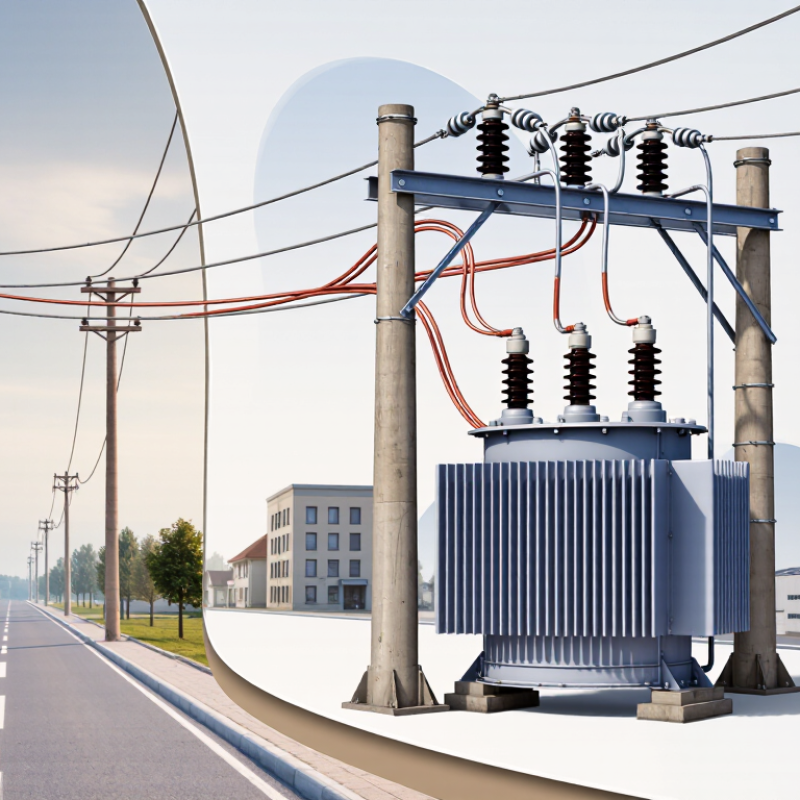
What Is a Step Down Distribution Transformer?

What Is a Step-Down Distribution Transformer?

A step-down distribution transformer reduces medium-voltage electricity to a safer, usable level for homes, shops, and small facilities. Typical secondary voltages include 120/240 volts for residential service and 400/230 volts in many commercial systems. The transformer uses electromagnetic induction, not mechanical switching. Its primary winding receives incoming power, while the secondary winding delivers lower voltage and higher current. A steel core guides the magnetic flux between both windings. The enclosure also protects insulation from moisture, dust, and accidental contact.

Scale matters.

The International Energy Agency’s Electricity Grids and Secure Energy Transitions report estimates that annual global grid investment must rise above 600 billion dollars by 2030. More local transformers will be needed. U.S. Department of Energy technical analyses have estimated that distribution transformers create roughly 60 percent of transformer energy losses in the United States. Small efficiency gains can therefore produce significant savings over decades. A practical inspection checks the nameplate, tap setting, grounding, oil condition, temperature, and connected load. A neat voltage formula can still mislead. Real demand fluctuates sharply when pumps, heaters, or chargers start. Oversizing may reduce thermal stress, but it can increase cost and idle losses. Undersizing is worse. It can cause overheating, voltage drop, shortened insulation life, and repeated service problems. Engineers should verify local standards and measured load data before selecting the transformer.

How 11 kV Primary Voltage Becomes 400/230 V for End Users

What Is a Step Down Distribution Transformer?

An 11 kV primary voltage becomes 400/230 V through electromagnetic induction. The transformer reduces voltage and increases usable current for local consumers. Its turns ratio is roughly 27.5:1, calculated from 11,000 V divided by 400 V. That ratio is only an ideal reference. Real systems experience winding losses, voltage drop, and temperature changes.

The high-voltage winding receives 11 kV from the medium-voltage network. The low-voltage winding then supplies 400 V between phases and 230 V between phase and neutral. This arrangement follows the nominal values listed in IEC 60038 for low-voltage systems. A typical roadside unit may hum beside a cabinet, with insulated conductors carrying power toward homes, shops, and small workshops. Tap settings help correct supply voltage, but they cannot remove every fluctuation.

IEA’s Electricity Grids and Secure Energy Transitions report estimates that about 80 million kilometres of grids must be added or refurbished globally by 2040. Distribution transformers will be part of that expansion. Efficiency matters because losses occur continuously, even when customers use little power. A transformer can feel warm during normal operation; excessive heat, however, may indicate overloading or poor ventilation. The simple 11 kV-to-400/230 V explanation is useful, but incomplete. Installation quality still decides whether the numbers work reliably in the field.

Core, Windings, and 50/60 Hz Insulation Design

What Is a Step Down Distribution Transformer?

Core, Windings, and 50/60 Hz Insulation Design

A step-down distribution transformer receives higher-voltage electricity and delivers safer, usable voltage. Its turns ratio controls this change. More turns on the primary winding and fewer turns on the secondary winding reduce voltage. The design still must carry the required load without excessive heating or voltage drop.

The core usually uses thin, insulated steel laminations. These layers limit eddy-current losses and guide magnetic flux through the windings. In practical inspections, uneven clamping or core vibration can reveal problems before electrical failure occurs. Small details matter. The windings use copper or aluminum conductors with layered paper, enamel, or other approved insulation. Their spacing must withstand normal operating stress and short-circuit forces.

At 50 or 60 Hz, insulation design depends on the applied voltage, winding arrangement, temperature, and moisture exposure. Engineers check clearances, creepage distances, dielectric strength, and thermal aging. The volts-per-hertz relationship also matters. Excessive flux can push the core toward saturation, causing noise and overheating. A transformer may pass a routine test yet perform poorly in a damp installation. That uncomfortable possibility deserves attention. Insulation barriers can weaken gradually, not suddenly. For this reason, reliable designs combine electrical testing with temperature monitoring, visual inspection, and careful installation practices.

Why Distribution Transformers Reach 95–99% Efficiency

What Is a Step Down Distribution Transformer?

Why Distribution Transformers Reach 95–99% Efficiency

A step-down distribution transformer lowers medium voltage for safe use in homes, offices, and factories. It uses electromagnetic induction between primary and secondary windings. A steel core guides the magnetic flux through both coils. The output voltage decreases while available current increases.

Its 95–99% efficiency means only 1–5% of input power becomes loss. Copper resistance creates heat in the windings, especially under heavy loads. The core also loses energy through hysteresis and eddy currents. Modern cores use thin, insulated steel sheets to reduce circulating currents. High-quality conductors and careful winding design further limit resistance. The result is impressive. Still, efficiency depends on operating conditions.

A transformer may perform best near its rated load, not during light demand. In a quiet utility room, you can feel this difference as gentle warmth from the enclosure. Technicians check temperature, voltage balance, connections, and unusual vibration during inspections. Loose joints can create extra heating. Harmonic currents from electronic equipment can increase losses as well. Cooling airflow matters, even when the transformer appears clean.

Real installations are rarely perfect. A unit can meet its laboratory rating but deliver less efficiency in the field. Long cables, uneven loading, aging insulation, and poor ventilation all affect performance. Maintenance records provide useful evidence, though they cannot replace measurements. Efficient operation is therefore a design goal and an ongoing practical responsibility.

What Is a Step-Down Distribution Transformer?

A step-down distribution transformer reduces medium-voltage electricity to a safer, usable low-voltage level for homes, commercial buildings, and industrial equipment. Its efficiency is typically highest near its normal operating load because fixed core losses and load-dependent copper losses are balanced.

Chart basis: Representative calculated values use 1% rated-capacity no-load loss and 1% full-load copper loss. Actual efficiency varies with transformer design, voltage, power factor, temperature, and loading conditions.

IEC 60076 Ratings, Protection, Cooling, and Maintenance

What Is a Step Down Distribution Transformer?

IEC 60076 Ratings, Protection, Cooling, and Maintenance

A step-down distribution transformer reduces medium voltage to a safer utilization level. IEC 60076 defines key performance requirements for many transformer types. Engineers check rated power in kVA or MVA, voltage ratio, frequency, impedance, insulation level, and temperature rise. Tap settings also matter. They help correct supply voltage changes, but incorrect settings can damage connected equipment.

Protection depends on the transformer design and installation. Fuses or circuit breakers limit fault current on the high- and low-voltage sides. Surge arresters help control lightning and switching surges. Oil-filled units may use temperature indicators, pressure relief devices, and Buchholz protection when a conservator tank is fitted. Dry-type units need suitable thermal sensors and clear ventilation. Protection must match the actual network.

Cooling affects both capacity and service life. Common oil-filled arrangements include ONAN and ONAF, while dry-type transformers often use natural air cooling. During maintenance, technicians inspect bushings, grounding connections, leaks, corrosion, noise, and unusual temperature patterns. Oil sampling may reveal moisture, acidity, or dissolved gases before visible failure appears. Insulation resistance and winding resistance tests provide useful evidence, but test conditions must be recorded carefully. No checklist is perfect. A clean enclosure does not prove healthy insulation, and a quiet transformer can still hide a developing fault. Regular records often expose small changes that memory misses.

FAQS

What does a step-down distribution transformer do?

It reduces medium voltage to safer levels for homes, shops, and small facilities. Common outputs include 120/240 volts or 400/230 volts. The secondary winding provides lower voltage and higher current. It uses electromagnetic induction. Not mechanical switching.

How does a transformer lower voltage?

The turns ratio controls the voltage change. The primary winding has more turns than the secondary winding. A steel core guides magnetic flux between both windings. This process is simple, but design errors can still cause trouble.

What materials protect the core and windings?

Thin, insulated steel laminations reduce eddy-current losses. Copper or aluminum conductors carry the electrical load. Layered paper, enamel, and approved insulation separate energized parts. The enclosure blocks moisture, dust, and accidental contact.

Why do transformers become warm during operation?

Copper resistance produces heat in the windings. The core also loses energy through hysteresis and eddy currents. Heavy loads usually increase winding temperature. Warmth is normal. Excessive heat is not.

How efficient is a typical distribution transformer?

Many distribution transformers reach approximately 95% to 99% efficiency. The remaining energy becomes heat and other losses. Efficiency changes with load, ventilation, cable length, and voltage balance. A laboratory rating may not match field performance.

What inspections help maintain a transformer?

Technicians should check the nameplate, tap setting, grounding, and connected load. They should inspect oil condition, temperature, ventilation, and unusual vibration. Loose connections can create local hot spots. Measurements matter more than appearance alone.

What happens when a transformer is undersized?

An undersized transformer may overheat during pumps, heaters, or charger startup. It can cause voltage drop and shorten insulation life. Repeated service problems may follow. The neat formula may be wrong.

Is oversizing always the safer choice?

Oversizing can reduce thermal stress and handle changing demand. However, it increases purchase cost and may increase idle losses. Engineers should use measured load data before selecting capacity. Real demand is rarely steady.

Why do moisture and temperature affect insulation?

Moisture can weaken insulation barriers gradually. High temperature accelerates thermal aging. A transformer may pass a routine test yet fail in a damp location. That possibility deserves attention.

What installation details improve transformer performance?

Keep cooling airflow clear and maintain balanced loading. Check clearances, creepage distances, grounding, and connection tightness. Monitor temperature and vibration during operation. Clean surroundings help, but cleaning alone is not maintenance.

Conclusion

A step-down distribution transformer reduces medium-voltage electricity to a safer, usable level for homes, businesses, and light industrial facilities. In a typical system, an 11 kV primary voltage is converted to approximately 400/230 V through electromagnetic induction, allowing three-phase and single-phase end users to receive the power they need. The transformer’s core and windings are designed for efficient magnetic coupling, while insulation systems are selected to withstand operating stresses at 50 or 60 Hz.

Modern step down distribution transformers commonly achieve efficiency levels of 95–99%, helping reduce energy losses throughout the distribution network. Their selection and operation are guided by IEC 60076 ratings, which address voltage, power capacity, temperature rise, insulation, and performance requirements. Depending on the application, transformers may use natural or forced cooling and include protective devices for overloads, short circuits, temperature, and abnormal voltage conditions. Regular inspections, oil or insulation checks, connection testing, and cleaning are essential for reliable service and longer equipment life.

Isla

Isla

Isla is a seasoned marketing professional with a deep-rooted expertise in the company's product offerings. With a keen eye for detail and a passion for innovation, she consistently delivers insightful and engaging content through the company's professional blog. Her articles not only showcase her......