Transformer Knowledge Base & Technical Insights — Kokila Electricals

Technical Blog

Transformer Insights & Engineering Articles

Discover technical articles, maintenance practices, and design innovations across power, distribution, furnace, and dry type transformers.

Industrial Furnace Transformer by Kokila Electricals
Industry Knowledge

Distribution & Power Transformer Solutions

Comprehensive guides on transformer selection, energy efficiency standards, and industrial grid deployment.

Electrical Distribution Transformer by Kokila Electricals
30+ Years Expertise

High Voltage & Dry Type Transformer Insights

Learn more about electrical safety, maintenance routines, and custom engineering applications.

Oil Filled Power Transformer by Kokila Electricals
0%

China’s steel, foundry, and nonferrous metal sectors create strong demand for induction furnace transformers. The World Steel Association reported China’s crude steel output at about 1.005 billion tonnes in 2024. That scale keeps furnace efficiency, reliability, and maintenance costs under close scrutiny.

Induction furnace transformers must handle frequent load changes, high currents, harmonic distortion, and demanding cooling conditions. The IEC 60076 transformer series provides a recognized technical foundation for design and testing. Meanwhile, the International Energy Agency continues to emphasize industrial electrification and energy efficiency in its electricity and clean-energy reports. These trends make transformer performance more important than a simple purchase price.

This guide examines China’s leading induction furnace transformers manufacturers through practical criteria. These include rated capacity, voltage range, impedance control, cooling design, protection systems, test documentation, and after-sales response. Factory experience matters. So does evidence from working installations.

A polished website proves little.

Buyers should request drawings, routine-test records, temperature-rise results, and references from comparable furnaces. They should also confirm compatibility with rectifiers, harmonic filters, and local power conditions. Some suppliers appear similar on paper, yet their engineering depth can differ sharply. That is an uncomfortable point, but it matters.

No ranking is perfect. Production scale may hide weak service, while a smaller manufacturer may offer better customization. Therefore, this overview combines public company information, industry standards, published market evidence, and realistic procurement concerns. The goal is not to promote one name blindly. It is to help technical buyers identify dependable Chinese suppliers for demanding furnace applications.
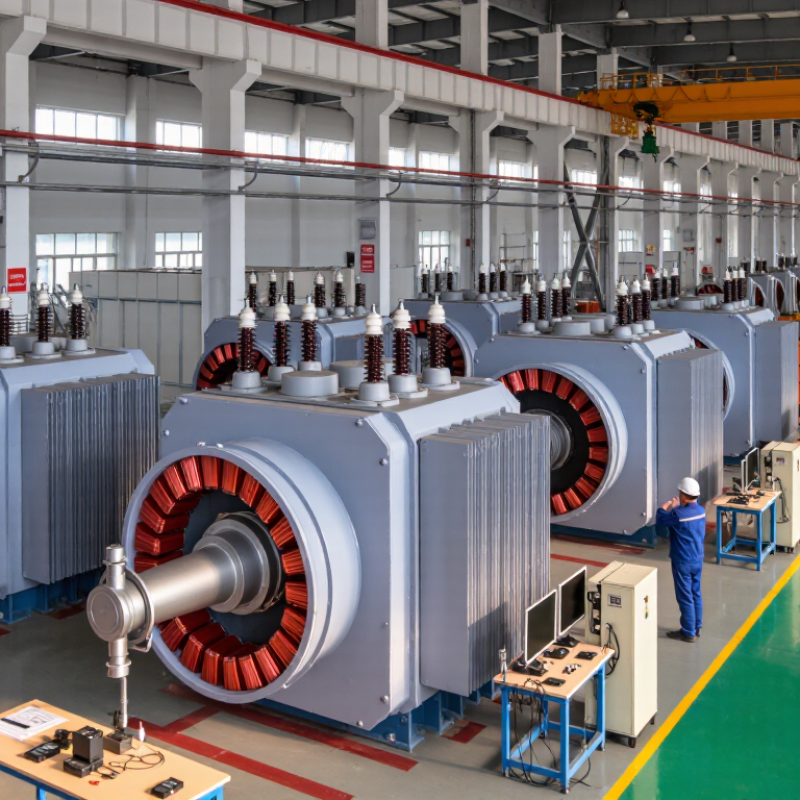
China Top Induction Furnace Transformers Manufacturers?

What Are Induction Furnace Transformers and How Do They Work?

Induction furnace transformers supply the controlled electrical power required to melt metal through electromagnetic induction. They do not heat the charge directly. Instead, the furnace coil creates a changing magnetic field, which produces electric currents inside the metal. These currents generate heat within the charge itself.

The transformer normally reduces medium- or high-voltage utility power to a lower voltage with very high current. Its secondary winding must handle severe thermal and electrical stress. During operation, the metal load can change quickly, so the transformer must respond without unstable voltage swings. Engineers check impedance, cooling capacity, insulation strength, and tap-changer performance before approving a design. Small details matter.

In practical furnace rooms, cooling water temperature, oil condition, bushing cleanliness, and connection tightness deserve regular inspection. A blocked cooler can raise winding temperature faster than expected. Protective relays monitor overloads, short circuits, and abnormal temperature readings. The transformer and furnace should also be matched for frequency, rated power, and duty cycle. A simplified explanation can miss harmonics and fluctuating loads. That is where real operating data becomes important. Some designs look efficient on paper but perform poorly under repeated start-stop cycles. Careful testing remains necessary.

Key Features of China’s Leading Induction Furnace Transformer Manufacturers

China’s leading induction furnace transformer manufacturers usually compete through engineering discipline, not appearance. Their strongest products match transformer ratings to furnace load cycles, starting current, harmonics, and cooling conditions. This matters because melting operations can punish weak insulation and undersized conductors. Experienced manufacturers often use high-quality copper windings, low-loss silicon steel cores, and reinforced insulation systems. Some designs include forced-oil or water-assisted cooling for demanding production schedules. Stable voltage control also helps reduce melting interruptions and unnecessary energy loss.

Look for evidence. Reliable suppliers provide routine factory tests, temperature-rise records, insulation checks, and transformer efficiency data. Clear nameplates and traceable component records make maintenance easier years later. Many manufacturers can adjust tap ranges, enclosure designs, cable layouts, and protection systems for specific furnace installations. Their technical teams should understand short-circuit forces, harmonic heating, grounding, and coordination with upstream switchgear. Practical installation guidance is valuable, especially when the site has limited space or high ambient temperatures.

No factory is perfect. A low price may conceal thinner insulation, weaker cooling channels, or limited after-sales support. Buyers should inspect production procedures, testing equipment, weld quality, and response times before placing large orders. Independent inspection can reveal problems that brochures rarely mention. A dependable manufacturer communicates limitations honestly and supplies drawings, manuals, spare-parts advice, and commissioning support. That level of accountability often matters more than polished marketing language.

Major Chinese Manufacturers and Their Product Capabilities

China’s induction furnace transformer sector is supported by a large and expanding industrial power base.

The China Electricity Council reported 3.35 billion kilowatts of installed generation capacity by the end of 2024. This scale creates steady demand for furnace transformers in steel, foundries, and nonferrous metal plants.

Major Chinese manufacturers generally offer oil-immersed furnace transformers from medium-voltage ratings to large custom units. Their capabilities often include copper or aluminum windings, reinforced insulation, adjustable impedance, and tap-changing systems for unstable furnace loads. Many factories design around IEC 60076 and relevant Chinese GB standards. Factory testing commonly checks temperature rise, dielectric strength, losses, and short-circuit resistance.

Practical details matter. A loose bushing connection can stop a production line.

The stronger suppliers also provide harmonic analysis, cooling calculations, installation guidance, and spare-part support. The IEA’s Electricity 2024 report highlights continued industrial electrification and rising grid demand, which increases pressure on equipment efficiency and reliability.

However, published efficiency figures are not always comparable. Some manufacturers emphasize no-load losses, while buyers need total operating losses under furnace conditions. This remains an area requiring more transparent reporting. Field experience suggests that service response, commissioning records, and maintenance training can matter as much as rated capacity.

How to Compare Transformer Quality, Efficiency, and Safety

China’s leading induction furnace transformer manufacturers should be compared through evidence, not advertising claims. Request factory test reports, winding resistance records, insulation results, and temperature-rise data. A reliable unit should show consistent readings across repeated tests. Small differences can reveal loose connections or uneven winding quality.

Efficiency deserves practical measurement. Check no-load losses, load losses, impedance, and cooling performance at the furnace’s real operating cycle. A transformer may appear efficient on paper but perform differently during frequent starts and stops. Ask for test conditions, measurement instruments, and calibration dates. I would also inspect copper joints, oil seals, radiators, and the tap changer. These details often expose weaknesses earlier than brochures. Perfect data is uncommon. That deserves careful questioning.

Tips: Compare identical ratings and duty cycles. Verify compliance with applicable IEC standards. Check short-circuit strength, grounding, pressure-relief devices, oil quality, and emergency shutdown arrangements. Ask whether protective relays were tested under simulated faults. Review maintenance intervals and spare-part access. Factory acceptance testing should include documented witness points. Do not choose the lowest quotation automatically; cheap insulation, weak cooling, or poor documentation can increase downtime and safety risks.

China Top Induction Furnace Transformers Manufacturers? - How to Compare Transformer Quality, Efficiency, and Safety
Evaluation Area Key Data Dimension Recommended Benchmark or Requirement How to Verify Why It Matters for Induction Furnaces
Electrical Design Rated power and voltage configuration The rated capacity, primary voltage, secondary voltage, frequency, and tap range should match the furnace power supply and site grid. Review the approved technical data sheet, single-line diagram, nameplate information, and design calculations. Incorrect voltage or capacity selection can cause overheating, unstable furnace operation, excessive losses, or premature insulation aging.
Electrical Design Short-circuit impedance The specified impedance should be compatible with the furnace converter, available fault current, voltage regulation, and required starting performance. Check the guaranteed impedance value and compare it with the system short-circuit study and converter requirements. Impedance affects fault current, voltage drop, commutation performance, and the transformer’s ability to withstand furnace load fluctuations.
Load Capability Continuous and intermittent duty rating The thermal design should be based on the actual duty cycle, including melting time, holding time, standby periods, overloads, and furnace restart frequency. Verify the load profile used for design and request temperature-rise calculations for the stated operating cycle. Induction furnaces commonly produce rapidly changing loads; a transformer sized only for average power may overheat during repeated melting cycles.
Thermal Performance Temperature rise Temperature-rise limits should comply with the applicable IEC 60076 requirements and the selected insulation system or liquid type. Review certified temperature-rise test results and confirm the cooling method, such as ONAN, ONAF, or another specified arrangement. Lower operating temperature generally improves insulation life and helps maintain stable performance in high-duty industrial service.
Efficiency No-load loss Compare guaranteed no-load loss in watts at rated voltage and frequency; lower values are preferable when the transformer remains energized for long periods. Request routine or type-test data measured according to IEC 60076-1 and the agreed purchasing specification. No-load losses occur whenever the transformer is energized, even when the furnace is not melting, and therefore affect annual electricity consumption.
Efficiency Load loss Compare guaranteed load loss at the specified reference temperature and rated current, rather than comparing loss figures without test conditions. Check the loss test temperature, current, winding connection, measurement uncertainty, and correction method. Load losses become especially important during high-current melting and holding operations and directly influence operating cost and heat generation.
Efficiency Transformer efficiency at operating load Evaluate efficiency at the actual operating points, for example 50%, 75%, 100%, and any documented overload condition, instead of relying only on one rated-load figure. Calculate efficiency using measured output power divided by input power, including both no-load and load losses. The best design for a furnace plant is the one with strong efficiency across its real duty cycle, not necessarily the one with the lowest loss at only one load point.
Power Quality Harmonic and waveform duty The transformer design should account for the converter topology, harmonic current spectrum, K-factor or equivalent thermal evaluation, and any required derating. Review the power-quality study, harmonic-current data, winding eddy-loss calculations, and specified converter operating conditions. Harmonics can increase winding eddy-current losses, stray losses, vibration, audible noise, and local hot spots.
Insulation Insulation level and dielectric strength Rated insulation levels, lightning impulse withstand, power-frequency withstand, and clearances should match the system voltage and installation environment. Verify the insulation coordination study, routine test results, and applicable IEC 60076 dielectric test records. Proper insulation coordination reduces the risk of internal breakdown caused by switching surges, lightning impulses, or abnormal system conditions.
Safety Protection and monitoring The package should include appropriate temperature monitoring, overcurrent protection, pressure or oil-level protection where applicable, and alarm/trip contacts. Review the protection schematic, alarm and trip settings, sensor specifications, and control-panel interface list. Early detection of abnormal temperature, pressure, or oil conditions can prevent severe equipment damage and improve personnel safety.
Oil-Immersed Design Insulating liquid quality The insulating liquid should meet the specified IEC or equivalent national requirements for dielectric strength, moisture, acidity, and breakdown performance. Request incoming-oil certificates, factory test results, and sampling procedures. Confirm whether mineral oil or an alternative fluid is specified. Moisture and contamination reduce dielectric strength and accelerate insulation deterioration, particularly under thermal and electrical stress.
Mechanical Strength Short-circuit withstand capability The active part, windings, clamping structure, and leads should be designed and tested for the calculated system short-circuit forces. Review short-circuit withstand calculations and any available type-test or design-validation evidence under IEC 60076-5. High fault currents create severe electromagnetic forces that can deform windings and cause hidden damage even when external damage is limited.
Noise and Vibration Sound level and vibration control The guaranteed sound-pressure level should be stated with the measurement distance, test environment, rated voltage, and operating condition. Compare factory sound-level test data and inspect core clamping, tank reinforcement, and vibration-isolation provisions. Controlled noise and vibration improve the working environment and reduce the risk of loosened connections or mechanical fatigue.
Manufacturing Quality Factory inspection and testing Routine tests should include winding resistance, voltage ratio, polarity or phase relationship, impedance, load loss, no-load loss, dielectric tests, and functional checks. Request the inspection and test plan, calibration certificates, signed factory test report, and customer witness-test procedure. Documented testing provides objective evidence that the completed transformer matches the approved design and purchase specification.
Materials Core, conductor, insulation, and sealing materials Material grades and insulation systems should be clearly specified, traceable, and suitable for the rated temperature and duty cycle. Check material certificates, incoming inspection records, conductor dimensions, insulation-system documentation, and traceability records. Consistent materials help control losses, thermal aging, dielectric reliability, and long-term mechanical stability.
Reliability Maintenance and spare-parts support The supply scope should define recommended inspection intervals, oil-sampling guidance where applicable, critical spare parts, and response procedures. Review the operation and maintenance manual, spare-parts list, warranty terms, and technical-support commitments. Clear maintenance requirements reduce unplanned downtime and help operators identify deterioration before a major failure.
Compliance Applicable standards and documentation The transformer should be designed and tested according to the applicable IEC 60076 series or equivalent contractual standards, with deviations explicitly listed. Compare the compliance matrix, drawings, calculations, test reports, certificates, and final approved documentation package. Standards-based documentation makes technical comparisons more objective and reduces ambiguity during inspection, installation, and acceptance.
Note: The benchmarks above are general procurement and engineering screening criteria. Final acceptance values should be defined by the project voltage, power rating, frequency, converter topology, duty cycle, cooling method, installation environment, and the applicable contract standards.

How to Select a Reliable Chinese Manufacturer for Your Furnace Project

How to Select a Reliable Chinese Manufacturer for Your Furnace Project

Choosing a Chinese induction furnace transformer manufacturer requires more than comparing prices. Start with your furnace’s power rating, voltage, duty cycle, harmonics, and cooling requirements. A capable manufacturer should review these details before offering a design. Ask for drawings, material specifications, routine test reports, and applicable IEC or national standards. Experience matters here. Transformers serving melting furnaces face repeated thermal and electrical stress.

Tips: Request customer references from similar furnace projects. Check whether the factory performs insulation, temperature-rise, leakage, and load tests. Confirm the testing equipment is calibrated. Review the warranty, spare-parts plan, delivery schedule, and after-sales response time. A clear technical contact can prevent expensive misunderstandings.

Visit the production site when possible. Look at winding areas, assembly cleanliness, copper connections, oil or dry-type protection, and final inspection records. Do not accept polished brochures as proof. Compare the proposed design with your furnace supplier’s actual operating data. I have seen projects delayed because communication focused on purchasing price, while cooling and harmonic conditions remained unclear. That mistake is easy to repeat. No supplier check is perfect, but documented questions expose weak preparation. Request a signed technical agreement before production begins. Keep every revision traceable. Reliable cooperation often appears in small details: precise answers, honest limitations, and consistent testing evidence.

China Top Induction Furnace Transformers Manufacturers? How to Select a Reliable Chinese Manufacturer for Your Furnace Project

A practical procurement framework for evaluating induction-furnace transformer suppliers. The weighting reflects the technical and commercial factors commonly reviewed during transformer specification, factory acceptance testing, and project delivery.

For a reliable furnace project, confirm compliance with the agreed IEC 60076 requirements, verify routine and type-test documentation, review previous furnace-duty experience, and assess after-sales support before comparing quotations.

FAQS

What does an induction furnace transformer do?

It reduces medium- or high-voltage utility power to lower voltage and very high current. The furnace coil then creates the magnetic field.

Does the transformer heat the metal directly?

No. The coil produces a changing magnetic field. This field creates electric currents inside the metal, which generate heat.

Why must the transformer handle severe stress?

Its secondary winding carries very high current during melting. Thermal stress, electrical stress, and changing metal loads can occur together.

What specifications should match the furnace?

Match the transformer’s frequency, rated power, duty cycle, impedance, and cooling capacity. Starting current and harmonic effects also deserve attention.

How can operators protect the transformer?

Inspect cooling-water temperature, oil condition, bushings, and connection tightness regularly. Protective relays should monitor overloads, short circuits, and abnormal temperatures.

What happens if the cooling system becomes blocked?

Winding temperature can rise quickly. A blocked cooler may cause damage before operators notice the problem.

Which factory tests should buyers request?

Request routine test results, temperature-rise records, insulation checks, and efficiency data. Independent inspection can reveal weaknesses hidden by polished brochures.

Can one transformer design fit every furnace installation?

Not reliably. Tap ranges, cable layouts, enclosure space, ambient temperature, and protection systems may require changes. Paper efficiency is not enough.

What should a dependable supplier provide after delivery?

Useful support includes drawings, manuals, spare-parts advice, installation guidance, and commissioning assistance. Response time matters too.

Are low prices always a good choice?

No. A low price may hide thinner insulation, weak cooling channels, or limited support. Still, expensive equipment is not automatically better.

Conclusion

Induction furnace transformers are specialized power units designed to supply stable, high-current electricity to induction melting systems. They convert incoming voltage to the levels required by furnace coils while supporting efficient energy transfer, reliable temperature control, and continuous industrial operation. Leading Chinese manufacturers typically focus on robust construction, customized electrical parameters, advanced cooling systems, low energy loss, and strong protection against overload, short circuits, and overheating. Their product capabilities may cover different furnace capacities, operating environments, and installation requirements.

When comparing suppliers, buyers should evaluate transformer efficiency, insulation quality, temperature performance, safety systems, testing procedures, delivery experience, and after-sales support. A reliable Chinese manufacturer should be able to provide clear technical documentation, accurate design calculations, quality-control records, and practical solutions tailored to the furnace project. Careful communication about power ratings, frequency, cooling methods, maintenance needs, and compliance requirements can help ensure that the selected induction furnace transformers deliver stable performance, long service life, and dependable production results.

Isla

Isla

Isla is a seasoned marketing professional with a deep-rooted expertise in the company's product offerings. With a keen eye for detail and a passion for innovation, she consistently delivers insightful and engaging content through the company's professional blog. Her articles not only showcase her......