Transformer Knowledge Base & Technical Insights — Kokila Electricals

Technical Blog

Transformer Insights & Engineering Articles

Discover technical articles, maintenance practices, and design innovations across power, distribution, furnace, and dry type transformers.

Industrial Furnace Transformer by Kokila Electricals
Industry Knowledge

Distribution & Power Transformer Solutions

Comprehensive guides on transformer selection, energy efficiency standards, and industrial grid deployment.

Electrical Distribution Transformer by Kokila Electricals
30+ Years Expertise

High Voltage & Dry Type Transformer Insights

Learn more about electrical safety, maintenance routines, and custom engineering applications.

Oil Filled Power Transformer by Kokila Electricals
0%

Choosing the best dry type transformers in 2026 requires more than comparing kVA ratings and purchase prices. Electrical demand is changing quickly. The International Energy Agency’s Electricity 2024 report forecasts global electricity demand will grow by about 4% annually through 2026. This growth increases pressure on commercial buildings, data centers, factories, and renewable energy facilities.

Reliability starts with the application. Engineers should verify primary and secondary voltages, load diversity, ambient temperature, altitude, short-circuit strength, and expected harmonics. A transformer serving variable-frequency drives may need stronger harmonic performance than one supplying office lighting. IEC 60076-11 provides the core international requirements for dry-type power transformers, including insulation and thermal considerations. Regional rules, such as energy-efficiency requirements from the U.S. Department of Energy, can also affect the final specification.

Small details matter. A compact plant-room unit may need a lower sound level and a suitable enclosure rating. A rooftop installation may require protection against moisture, dust, and temperature swings. Resin-encapsulated designs can offer valuable environmental protection, but they are not automatically the best choice for every project. No single model wins every site. That is easy to forget.

The selection process should balance efficiency, fire safety, lifecycle cost, service access, and supplier support. Manufacturer test reports, factory quality records, and independent certification deserve close review. A low purchase price can become expensive through higher no-load losses, difficult maintenance, or poor spare-parts availability. This guide examines the technical evidence and practical trade-offs behind choosing dry type transformers for modern power systems. Some assumptions may need revision as grid conditions and efficiency standards continue to change.
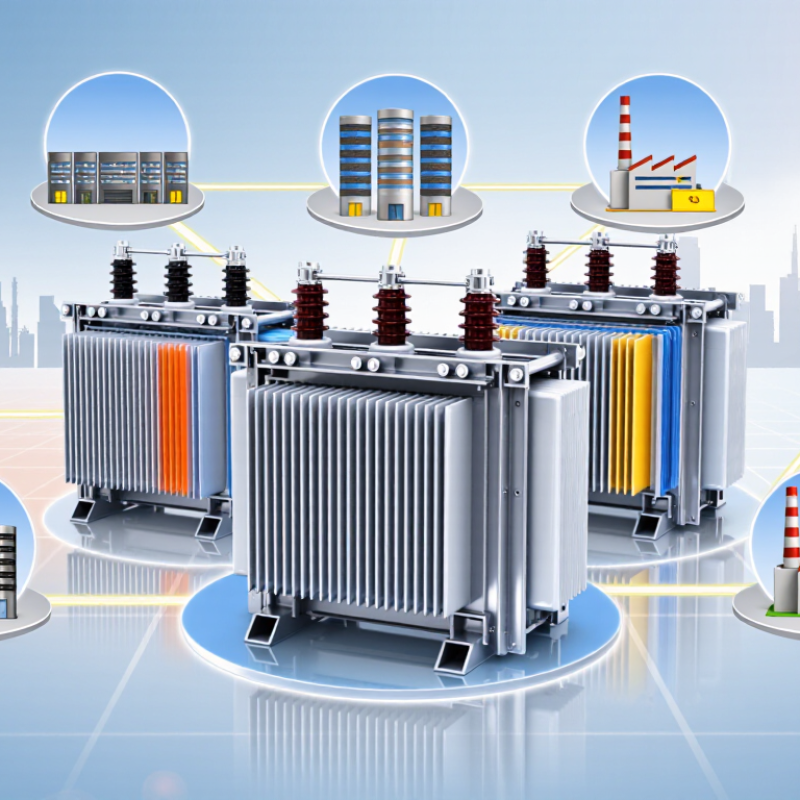
How to Choose the Best Dry Type Transformers in 2026?

What Are Dry Type Transformers and How Do They Work?

How to Choose the Best Dry Type Transformers in 2026?

What Are Dry Type Transformers and How Do They Work?

Dry type transformers transfer electrical energy without oil or another liquid coolant. Their windings sit in air, or inside solid insulation such as epoxy resin. The primary winding receives voltage and creates magnetic flux inside a laminated steel core. The secondary winding then converts that flux into a different voltage.

The process is quiet but not effortless. Heat moves from the windings to the surrounding air through conduction and ventilation. Cast-resin designs protect coils from moisture, dust, and chemical exposure. However, “dry” does not mean maintenance-free. Blocked ventilation can raise winding temperature quickly. Site measurements still matter.

The U.S. Department of Energy’s 2024 technical support document estimates that updated distribution-transformer efficiency standards could save 3.6 quadrillion British thermal units over 30 years. That figure highlights the importance of no-load losses, which occur whenever a transformer remains energized. Market research reports also forecast steady dry-type transformer growth, with MarketsandMarkets projecting roughly 7% annual growth through the late 2020s.

For 2026 projects, compare efficiency, insulation class, temperature rise, sound level, enclosure rating, and available fault protection. IEC 60076-11 and IEEE C57.12.01 provide useful technical references. I would also check altitude, humidity, harmonics, and cleaning access. Engineers sometimes overlook the last detail. That mistake becomes expensive in dusty electrical rooms.

Which Electrical and Environmental Requirements Should You Assess?

How to Choose the Best Dry Type Transformers in 2026?

Electrical and environmental requirements should guide transformer selection before price comparisons begin. Check rated power, primary and secondary voltage, frequency, insulation class, impedance, and short-circuit withstand. IEC 60076-11 classifies dry-type transformers by insulation system and thermal behavior, providing a practical testing framework. Do not rely only on the nameplate. Measure real load profiles, including motor starts, nonlinear equipment, and overnight demand.

Efficiency matters under changing loads. The International Energy Agency’s Electricity 2024 report estimates that data-center electricity consumption could exceed 1,000 TWh by 2026, more than doubling from 2022 levels. This growth increases the value of low-loss transformers, especially in facilities operating continuously. Compare no-load and load losses at the actual loading point. A smaller transformer may look efficient, but poor ventilation can raise winding temperature and reduce service life.

Environmental assessment needs physical detail. Confirm ambient temperature, altitude, humidity, dust, salt exposure, seismic conditions, and available ventilation. Dry transformers avoid liquid leakage risks, but they are not maintenance-free. IEC 60076-11 testing can support fire and environmental evaluations, while enclosure protection should match the installation area. Check acoustic limits near offices or apartments. Fan cooling may increase capacity, yet it adds noise and moving parts. I would not assume the highest efficiency rating is automatically best; lifecycle energy, cooling, maintenance, and replacement access deserve equal scrutiny.

How Do You Compare Transformer Ratings, Designs, and Insulation Classes?

Choosing the best dry type transformer in 2026 starts with a careful comparison of ratings, design, and insulation class. The kVA rating must cover the calculated load, starting current, and reasonable future growth. A unit running continuously near its limit may overheat, even when the nameplate appears adequate. Check primary and secondary voltages, frequency, phase arrangement, impedance, and available fault current. Site conditions matter too. High altitude, dust, moisture, and poor ventilation can reduce practical capacity.

Design affects reliability and maintenance. Open ventilated transformers can suit clean indoor rooms with controlled airflow. VPI designs offer reinforced winding protection for demanding environments. Cast resin units resist moisture better, but they may cost more and require careful heat dissipation. In site inspections, I look for clearances, airflow paths, cable access, and evidence of routine temperature monitoring. Small installation errors can create large operating problems. That shortcut often fails.

Insulation class should not be confused with allowable operating temperature. Class F or H insulation can tolerate higher thermal stress, but the selected temperature rise still determines winding temperature. Lower temperature rise may improve service life, especially in facilities with heavy daily loading. Review thermal test reports, impulse withstand levels, partial discharge data, and applicable certification documents. Ask whether the transformer was tested as supplied, not only whether its components meet a standard. I would also compare noise, losses, enclosure protection, service access, and replacement lead time. The cheapest rating is rarely the lowest lifetime cost.

What Safety, Efficiency, and Maintenance Features Matter Most?

Choosing a dry type transformer in 2026 means examining safety beyond the nameplate. Select insulation systems tested for heat, moisture, and short-circuit stress. Class F or H insulation can support higher operating temperatures, but better cooling still matters. Check clearances, enclosure ratings, and protection against accidental contact. A properly sized temperature sensor should trigger alarms before insulation damage begins.

Efficiency deserves practical attention. Compare no-load and load losses at the facility’s actual operating profile, not only at full capacity. A lightly loaded transformer can waste energy continuously through core losses. Look for low-loss magnetic materials, quiet cooling fans, and efficient airflow paths. Harmonic-rich loads require careful evaluation because computers, drives, and chargers may create extra heating. A power-quality study is often worth the modest cost.

Maintenance should be simple enough for busy technicians. Removable panels, clear inspection points, and accessible terminals reduce service errors. Record winding temperature, vibration, dust buildup, and connection torque during scheduled inspections. Keep ventilation openings clean; a thin gray layer of dust can raise temperatures surprisingly fast. Field experience shows that neglected airflow causes avoidable failures. A checklist helps, but it is not perfect. Humidity, installation quality, and changing loads can defeat assumptions. Ask for verified test reports, installation guidance, and service procedures aligned with applicable IEC or IEEE requirements. The cheapest purchase may become the most expensive equipment decision.

How Can You Select the Right Manufacturer and Confirm Long-Term Value?

Choosing the right dry type transformer starts with the manufacturer, not the brochure. In field assessments, I have seen similar ratings produce very different results. Ask how the factory controls winding quality, insulation materials, resin curing, and temperature testing. Request test records for partial discharge, dielectric strength, losses, and temperature rise. Clear records show discipline. Vague answers deserve caution.

Study the manufacturer’s experience with your actual operating conditions. A transformer serving a hospital, data center, workshop, or coastal building may require different protection and enclosure details. Check the manufacturer’s history with comparable voltage levels, loads, cooling methods, and installation environments. Visit the production site if possible. Observe whether testing equipment is maintained and whether technicians explain failures honestly. That conversation matters.

Long-term value includes more than the purchase price. Compare efficiency losses across the expected annual load profile, not only the nameplate rating. Review warranty limits, response times, spare-part availability, and local service capacity. Ask who will support the transformer after the sales team leaves. Get maintenance guidance in writing. Also verify compliance with applicable safety and performance standards through independent documentation.

Do not accept every forecast as fact. Future loads may change, and promised savings can be overstated. Build a simple lifecycle model using realistic energy prices, downtime risks, inspection costs, and replacement access. A manufacturer that welcomes difficult questions may be more reliable than one offering the lowest bid. Reliability is demonstrated over years, not during a polished factory presentation.

FAQS

How should a transformer’s kVA rating be selected?

Match the rating to calculated load, starting current, and realistic future growth. Leave practical capacity margin. Continuous operation near the limit can cause overheating, even with a suitable nameplate.

Which electrical details should be compared before selection?

Compare primary and secondary voltages, frequency, phase arrangement, impedance, and available fault current. Confirm the transformer matches the facility’s actual electrical system. Small mismatches can create major operating problems.

How do site conditions affect transformer performance?

High altitude, dust, moisture, and poor ventilation can reduce usable capacity. Check airflow paths and room clearances during inspection. A thin gray dust layer can raise temperatures quickly.

Which dry transformer design suits different environments?

Open ventilated designs suit clean indoor rooms with controlled airflow. VPI designs provide reinforced winding protection for demanding conditions. Cast resin designs resist moisture better, but need careful heat dissipation.

What does insulation class indicate?

Class F or H insulation tolerates greater thermal stress. It does not automatically define the allowable operating temperature. Selected temperature rise remains important. This distinction is easy to overlook.

Which test documents should buyers request?

Request thermal test reports, impulse withstand results, partial discharge data, and applicable certification documents. Confirm testing covered the complete supplied transformer. Component compliance alone may not prove finished-unit performance.

How can transformer efficiency be evaluated realistically?

Compare no-load and load losses using the facility’s actual operating profile. A lightly loaded transformer still consumes energy through continuous core losses. Harmonic-rich equipment can create additional heating. A power-quality study may reveal hidden losses.

What maintenance features reduce service problems?

Choose removable panels, accessible terminals, and clear inspection points. Inspect temperature, vibration, dust buildup, ventilation, and connection torque regularly. Keep air openings clean. Checklists help, but they cannot predict every changing load or humidity problem.

Conclusion

Choosing the best dry type transformers in 2026 requires more than comparing purchase prices. These transformers use solid insulation instead of liquid cooling, making them suitable for indoor facilities, commercial buildings, industrial plants, and locations where reduced fire and leakage risks are important. Start by assessing voltage, load capacity, frequency, installation space, altitude, ambient temperature, humidity, ventilation, and expected duty cycle. These factors help determine the correct transformer rating, cooling method, insulation class, enclosure, and protection level.

A reliable selection should also balance efficiency, safety, and long-term maintenance needs. Look for low no-load and load losses, strong temperature control, noise reduction, accessible inspection points, and protection against dust or moisture when required. Consider the transformer’s overload capability, testing documentation, service support, spare-parts availability, warranty terms, and compliance with applicable electrical standards. Comparing total ownership costs—including installation, energy use, maintenance, and expected service life—will help identify a dependable solution that delivers stable performance and long-term value.

Sophia

Sophia

Sophia is a dedicated marketing professional with a robust expertise in the company’s product offerings. With an unwavering commitment to delivering high-quality content, she frequently updates our professional blog to share insights and updates that reflect the latest industry trends and......